
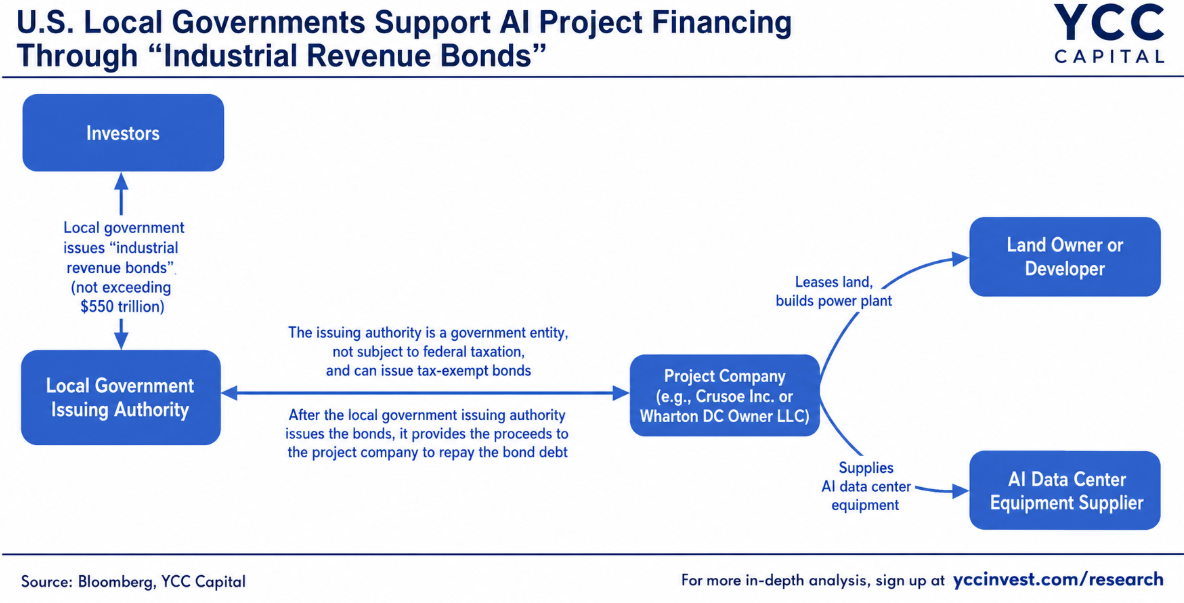
YCC CAPITAL Innovation Themes & Strategy Date: August 7, 2026 Executive Summary Every technological revolution begins with optimism. Railroads transformed commerce before many lines went bankrupt. Fiber-optic networks were massively overbuilt during the dot-com era before eventually becoming the backbone of the internet economy. Artificial intelligence infrastructure appears to be entering a similar phase today. Governments, hyperscalers, and private capital are racing to build computing capacity, yet the commercial ecosystem capable of fully utilizing that capacity is still developing. From YCC Capital’s perspective, this distinction between infrastructure demand and economic return will become one of the defining macro investment themes of the second half of this decade. Investors should resist the temptation to treat all AI capital expenditure as immediately productive. Instead, the investment cycle is likely to unfold in several stages: first, infrastructure construction; second, enterprise adoption; third, sustainable monetization; and finally, productivity gains that justify the enormous upfront investment. This sequencing matters enormously for asset allocation. Global AI Infrastructure Spending Has Entered a New Phase Around the world, AI investment has rapidly evolved from private-sector experimentation into a matter of national industrial strategy. Major economies increasingly regard AI as foundational infrastructure comparable to electricity grids, transportation systems, or telecommunications networks. Consequently, public policy has shifted from encouraging innovation toward actively financing large-scale deployment. Several recent initiatives illustrate the extraordinary scale of this commitment: The four largest U.S. hyperscale cloud providers announced combined 2026 capital expenditure plans exceeding US$700 billion. South Korea unveiled its national “Three Mega Projects” focused on semiconductors, Physical AI, and AI data centers, representing planned investment of approximately RMB 6.4 trillion. Japan intends to mobilize roughly ¥101.6 trillion of combined public and private investment in AI and semiconductors by fiscal 2040. The European Union continues expanding semiconductor investment through the proposed European Chips Act 2.0. This increasingly resembles an international infrastructure race rather than a conventional technology investment cycle. Much like the construction of national railway systems or 5G networks, governments increasingly view AI capacity as a strategic asset rather than simply a commercial opportunity. Governments Are Becoming Financing Partners One particularly notable development is the increasing willingness of governments to facilitate AI infrastructure financing. Rather than relying solely on private investment, public authorities are experimenting with innovative financing structures. One example highlighted in our analysis involves Missouri, where local authorities proposed issuing up to US$85 billion in industrial revenue bonds to support construction of a Crusoe-affiliated AI data center. Under this structure, the government temporarily owns infrastructure assets before leasing them back to operators, allowing project revenues to service the debt. This approach demonstrates an important evolution. Governments are no longer merely regulating AI—they are becoming balance-sheet participants. Such financing mechanisms reduce funding costs while accelerating deployment, a trend that may spread globally as AI becomes increasingly intertwined with national competitiveness. China’s Ambitious AI Infrastructure Vision China has likewise elevated computing infrastructure into one of its highest strategic priorities. Authorities have identified six major infrastructure networks for accelerated development: Water infrastructure Modern electricity grids National computing networks Next-generation communications networks Underground municipal infrastructure Modern logistics networks Among these, the national computing network stands out as the centerpiece of AI development. According to official guidance, direct investment in computing-network construction during the Fifteenth Five-Year Plan could reach approximately RMB 4 trillion, largely through expansion of the “East Data, West Computing” initiative. Telecommunications investment adds another substantial layer, with Chinese carriers expected to invest over RMB 1.3 trillion between 2025 and 2030 in communications infrastructure supporting AI deployment. Estimating China’s Future AI Data Center Buildout One of the report’s central analytical exercises involves translating investment targets into physical computing capacity. International comparisons suggest that constructing a 1 GW AI data center requires roughly US$38–44 billion of upfront capital. China benefits from significantly lower non-hardware construction costs. Based on several announced domestic projects, excluding AI servers and chips, physical construction costs average only RMB 20–25 billion per GW. When AI hardware procurement is included, total investment rises to approximately RMB 160–172 billion per GW, roughly 65% of comparable U.S. construction costs. Applying these assumptions to the government’s projected RMB 4 trillion investment implies potential deployment of at least 24.1 GW of new AI data-center capacity. This estimate should be viewed as a lower bound. Should domestic AI hardware become materially cheaper than imported alternatives, total deployable capacity could exceed this figure. Token Demand Suggests Capacity Could Eventually Be Utilized Infrastructure investment only makes sense if future demand ultimately absorbs new capacity. Using Microsoft’s published estimates of energy consumption per AI request together with assumptions regarding data-center utilization, the report estimates that 24.1 GW of new capacity could support incremental daily AI inference demand of approximately 529 trillion tokens. That would raise China’s estimated daily token usage from roughly 100 trillion tokens at the end of 2025 to approximately 629 trillion tokens over the Fifteenth Five-Year Plan period. Supporting this projection is the remarkable acceleration already observed in AI usage. Official statistics cited in the report indicate that China’s average daily token consumption increased from roughly 100 billion in early 2024 to 100 trillion by the end of 2025, before reaching approximately 140 trillion by March 2026. Such explosive growth suggests that, purely from a demand perspective, substantial additional computing capacity could eventually find users. Nevertheless, translating usage growth into sustainable economic returns remains a far more difficult challenge. Reality Has Yet to Match the Vision Despite ambitious plans, implementation remains considerably slower. One revealing indicator is China’s issuance of local government special bonds that finance physical investment projects. During the first seven months of 2026, issuance reached only 58.5% of the expected annual quota, representing a noticeably slower pace than previous years. More strikingly, only around 1.6% of these investment funds were directed toward new infrastructure categories such as AI data centers. This disconnect highlights a recurring challenge in China’s investment model. While central planning can announce extraordinarily large targets, local governments ultimately require projects capable of generating acceptable economic returns and passing increasingly rigorous feasibility
The AI Adoption Chasm: Why Smarter Models Alone Won’t Deliver the Productivity Revolution
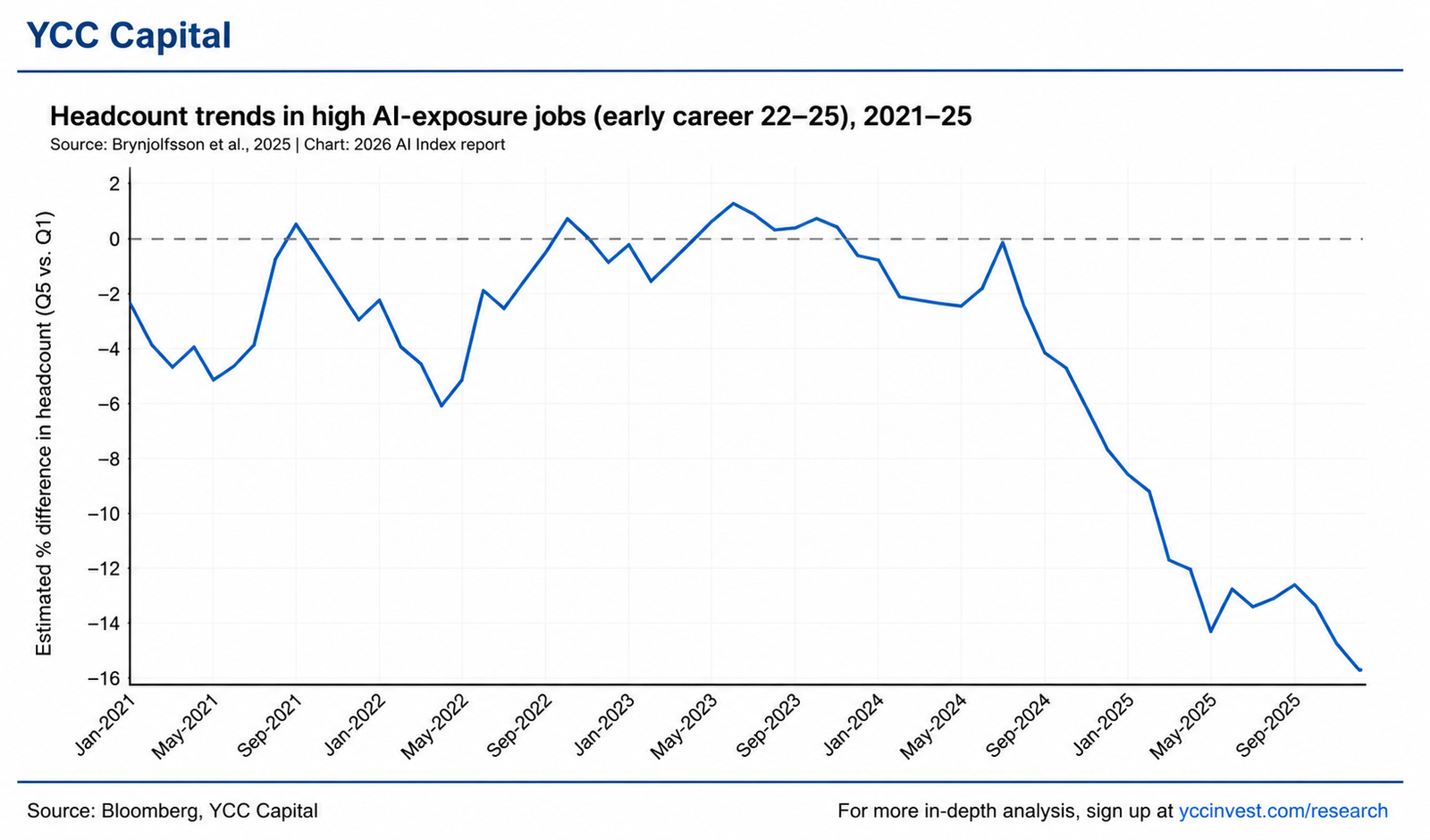
YCC CAPITAL Innovation Themes & Strategy July 12, 2026 Executive Perspective Every technological revolution begins with excitement but ultimately succeeds through reinvention rather than invention. The arrival of electricity did not immediately transform manufacturing. Early factories simply replaced steam engines with electric motors while preserving the same layouts, workflows, and management structures. Only decades later, when factories reorganized production around distributed power systems, did productivity truly accelerate. Artificial intelligence has entered a remarkably similar phase. Today’s frontier models are capable of writing software, drafting legal contracts, summarizing research, and solving increasingly sophisticated reasoning problems. Yet for most enterprises, these breakthroughs remain largely additive rather than transformative. Employees produce presentations faster, programmers write code more efficiently, and customer service representatives resolve tickets more quickly. These are meaningful improvements, but they fall well short of the productivity revolution investors increasingly assume is inevitable. At YCC Capital, we believe the next stage of the AI cycle will be determined far less by model intelligence than by organizational adaptability. The central investment question is no longer whether large language models will become more capable. They almost certainly will. Instead, the question is whether corporations can redesign decades-old operating models, fragmented data architectures, and entrenched incentive systems quickly enough to convert technological capability into sustainable economic value. This organizational bottleneck has become the defining constraint on AI diffusion—and, by extension, the key variable governing both AI valuations and macroeconomic productivity. The Real Productivity Revolution Begins Inside the Enterprise Much of today’s public discussion continues to frame AI through the lens of labor replacement. Headlines routinely ask whether machines will replace accountants, software engineers, lawyers, or financial analysts. This framing misses the more consequential economic story. Historically, general-purpose technologies rarely generate transformational productivity simply by substituting for individual workers. Instead, they reshape entire organizations. A company does not become dramatically more productive because one employee drafts emails twice as quickly. It becomes more productive when information moves faster, decisions become more automated, coordination costs collapse, and organizational bottlenecks disappear. AI therefore should not be evaluated primarily through consumer adoption statistics, subscription growth, benchmark scores, or chatbot usage. Instead, investors should ask four far more important questions: Has AI entered mission-critical workflows? Has it fundamentally changed organizational decision-making? Has it generated measurable and repeatable returns on investment? Has it translated into higher economy-wide productivity? Until these conditions are met, stronger models alone will not justify permanently higher valuations. This distinction explains why today’s AI boom resembles previous technology revolutions far more than many investors appreciate. Electricity, the internet, cloud computing, and smartphones all experienced extended periods during which technological capability advanced far faster than organizational adaptation. AI is unlikely to prove different. Technology Evolves Quickly. Organizations Do Not. Technology is a fast-moving variable. Corporate structures are not. Many executives underestimate how deeply today’s enterprises remain anchored to organizational designs created decades before AI existed. Legacy approval processes. Departmental silos. Fragmented databases. Disconnected software systems. Rigid reporting structures. These institutional layers accumulate over decades, creating what software engineers commonly describe as technical debt. Replacing them is extraordinarily difficult. Anyone who has renovated an old home understands this challenge intuitively. Painting the walls is easy. Replacing the foundation is not. Enterprise AI faces exactly the same problem. Adding an AI assistant to existing workflows resembles repainting the house. Rebuilding workflows around autonomous AI agents requires reconstructing the foundation itself. The latter creates lasting productivity gains. The former mainly improves convenience. Three Structural Barriers Slowing AI Adoption Barrier One: Enterprise Data Remains Fragmented Modern AI thrives on clean, structured, accessible information. Most enterprises possess precisely the opposite. Public internet data—the material used to train foundation models—is relatively standardized and widely accessible. Corporate knowledge is neither. Critical information remains scattered across ERP systems, CRM databases, procurement platforms, legal archives, customer support records, engineering documentation, spreadsheets, emails, and countless undocumented employee processes. More importantly, enterprise data carries institutional context. A contract means little without understanding internal legal standards. A customer interaction log means little without historical relationship knowledge. A financial report often depends upon unique accounting conventions developed over many years. Consequently, the challenge facing enterprise AI is not simply better models—it is transforming fragmented institutional knowledge into machine-readable organizational capital. Data governance, permissions, APIs, compliance frameworks, and standardized architectures increasingly determine AI success far more than raw model capability. This dynamic becomes even more pronounced in physical AI applications. Recent industry surveys indicate that proprietary enterprise data now represents the dominant source of training information for robotics and embodied AI systems, substantially exceeding reliance on public datasets. The more specialized an industry becomes, the more valuable—and difficult to utilize—its proprietary data becomes. Barrier Two: Technical Debt The second obstacle is legacy technology. Few large organizations operate on modern digital foundations. Instead, they rely upon decades of accumulated software patches, legacy databases, custom interfaces, and highly specialized code that remains mission-critical despite its age. Many government agencies illustrate this challenge. The U.S. Social Security Administration, for example, continues to rely heavily on COBOL systems originally developed decades ago. Although modernization efforts continue, replacing core infrastructure has proven extraordinarily difficult because operational continuity cannot be compromised. The lesson extends well beyond government. Banks. Insurance companies. Hospitals. Manufacturers. Telecommunications providers. All depend upon deeply interconnected legacy systems that cannot simply be replaced because AI has become more capable. Even when organizations recognize the need for modernization, migration risks—including cybersecurity vulnerabilities, operational disruptions, regulatory complications, and data integrity concerns—slow implementation dramatically. AI capability has accelerated exponentially. Institutional modernization has not. Barrier Three: Organizational Incentives Perhaps the least appreciated constraint is organizational behavior itself. Technology adoption is rarely determined by technology alone. It is governed by incentives. Many technology firms initially encouraged widespread AI usage internally, only to discover that computing expenses expanded much faster than expected. In several widely discussed corporate cases, token consumption surged so rapidly that management imposed monthly usage caps despite enthusiastic employee adoption. Higher AI utilization did not automatically translate into higher corporate productivity. Instead, organizations frequently observed a phenomenon
The AI Economy Has Two Engines: Why Demand Booms Today and Productivity Wins Tomorrow
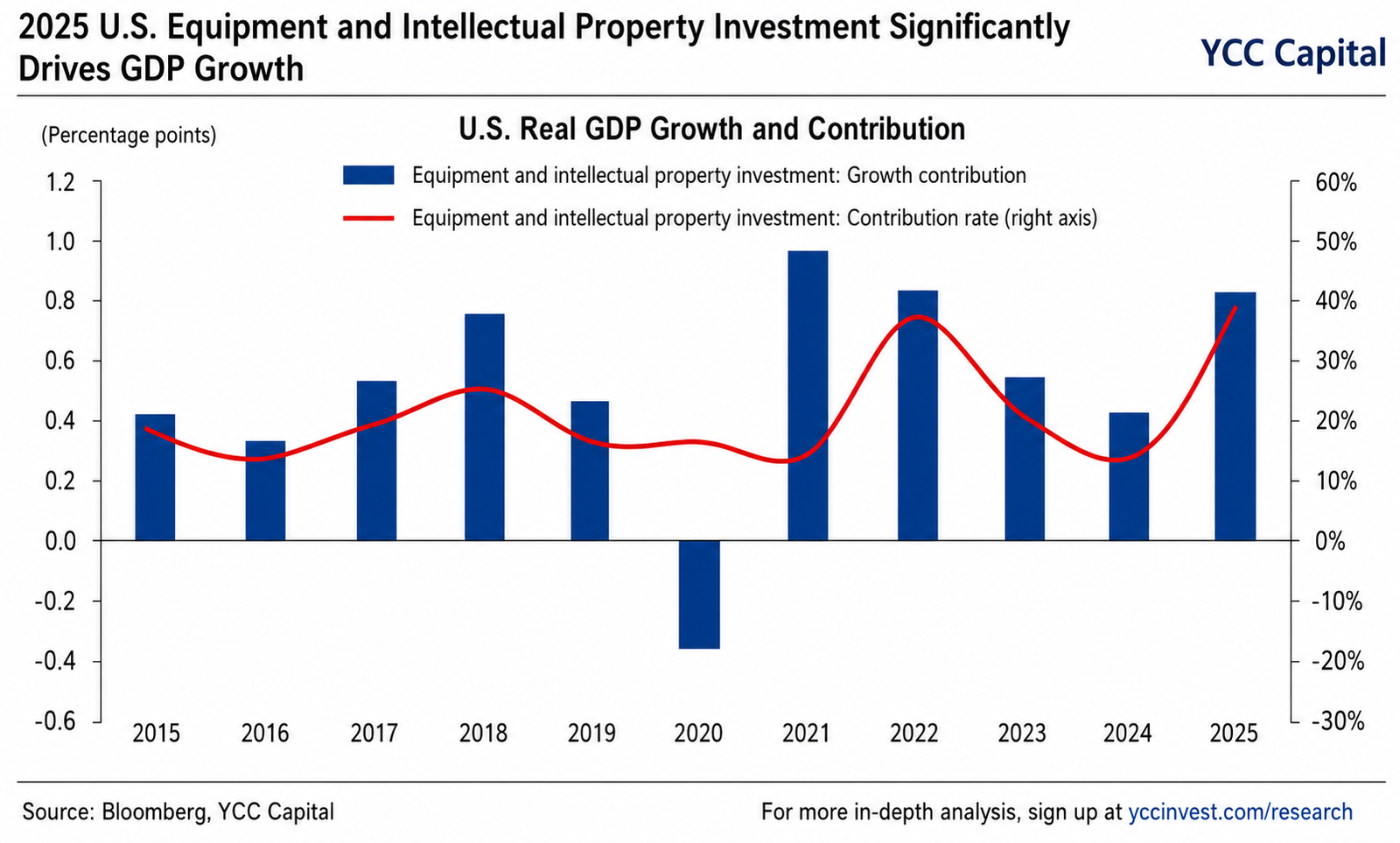
YCC CAPITAL Innovation Themes & Strategy Date: July 2, 2026 Executive Perspective Every major technological revolution begins with excitement, enormous capital spending, and widespread predictions that the economy has entered an entirely new era. Railroads, electricity, automobiles, the internet—all followed remarkably similar paths. Investors initially overestimated the short-term economic transformation while underestimating the profound long-term changes that eventually unfolded. Artificial intelligence appears to be following that same historical script. The current AI cycle is often described as a productivity revolution, yet much of what markets are experiencing today is not productivity—it is demand. Massive investment in semiconductors, hyperscale data centers, networking infrastructure, cloud computing, and enterprise software has become one of the largest capital expenditure cycles in decades. Those investments are already reshaping business cycles, financial markets, and monetary policy. The productivity revolution, however, remains largely ahead of us. This distinction is critical because it explains why AI has already transformed the U.S. economy while its macroeconomic influence in China remains considerably more limited despite equally impressive technological advances. At YCC Capital, we believe investors should evaluate AI through two entirely different macroeconomic lenses. The first is AI as a cyclical demand shock, capable of altering economic expansions, inflation dynamics, and capital markets over the next several years. The second is AI as a structural productivity revolution, capable of permanently lifting potential economic growth—but only if technological diffusion, institutional adaptation, and labor-market adjustment successfully occur. Confusing these two mechanisms has become one of the biggest analytical mistakes in today’s macro debate. AI Operates Through Two Separate Economic Channels Macroeconomics traditionally distinguishes between two different questions. The first asks why economies fluctuate over business cycles. The second asks why economies become richer over decades. Artificial intelligence influences both, but through fundamentally different mechanisms. During the early stages of adoption, AI behaves primarily as an investment shock. Firms dramatically increase capital expenditure before productivity improvements are fully realized. Data centers, advanced chips, networking equipment, cloud infrastructure, software development, and organizational restructuring all require enormous investment long before measurable productivity gains appear in official statistics. Economists Erik Brynjolfsson, Daniel Rock, and Chad Syverson describe this phenomenon as the Productivity J-Curve. During the early phase of a general-purpose technology, businesses devote enormous resources toward intangible investments—organizational redesign, employee training, workflow transformation, and software integration—that national accounting systems fail to capture adequately. As a result, productivity often appears disappointingly weak precisely when technological investment is strongest. History repeatedly demonstrates this pattern. Electricity required decades before factory designs evolved enough to unlock its full efficiency gains. Likewise, the internet generated massive investment during the 1990s while economy-wide productivity improvements only became fully visible years later. Artificial intelligence appears to be progressing through a remarkably similar trajectory. AI Has Already Reshaped the U.S. Business Cycle Perhaps nowhere is AI’s cyclical impact more evident than in the United States. Conventional macroeconomic models suggested that America’s aggressive monetary tightening following the post-pandemic inflation surge would eventually push the economy into recession. Yield-curve inversion, weakening employment indicators, and slowing housing activity all historically pointed toward a meaningful downturn. Instead, recession never arrived. The missing variable was AI. Large technology companies initiated one of the largest investment booms in modern corporate history. Spending on semiconductor infrastructure, cloud capacity, GPU clusters, and AI software accelerated despite elevated interest rates. According to the report, equipment and intellectual property investment contributed approximately 0.8 percentage points to U.S. GDP growth in 2025 despite representing only a modest share of the economy. Their contribution accounted for roughly 40% of total economic growth, highlighting how concentrated AI-driven investment has become. Equally important was the wealth effect. U.S. household equity holdings climbed to record levels as AI optimism fueled one of the strongest technology-led bull markets in decades. Rising financial wealth supported consumer spending even as labor market momentum moderated. This combination fundamentally altered the expected business cycle. Instead of the anticipated “soft landing,” the economy effectively experienced what many analysts described as a “no landing” scenario. Yet beneath the surface, important fractures emerged. Employment growth slowed. Housing investment weakened. Interest-sensitive sectors continued struggling. Meanwhile, AI-related industries, capital owners, and high-income households captured a disproportionate share of economic gains. The result has been an increasingly pronounced K-shaped economy, where extraordinary technological prosperity coexists with broader economic unease. Why AI Complicates Monetary Policy AI investment creates a unique policy challenge because it simultaneously expands both demand and future productive capacity. Traditional macroeconomic theory often emphasizes the long-run deflationary effects of technological progress. Higher productivity generally lowers production costs and increases supply. However, the early stages of technological revolutions frequently generate inflationary pressures rather than disinflation. Companies compete aggressively for scarce computing resources. Construction of data centers intensifies. Specialized labor becomes increasingly expensive. Semiconductor supply chains tighten. Organizational restructuring requires significant upfront expenditure. Consequently, central banks must distinguish between temporary investment-driven inflation and structural productivity improvements that may only materialize years later. This timing mismatch complicates monetary policy considerably. The Federal Reserve therefore faces an unusual dilemma: restraining inflation risks suppressing one of the world’s most important productivity investment cycles, while remaining too accommodative risks amplifying financial excesses and speculative capital allocation. China’s AI Boom Is Real—but Its Macroeconomic Impact Remains Limited China’s AI sector has expanded rapidly across high-technology manufacturing, digital services, and export industries. Investment in information services has accelerated. High-technology industrial production continues outperforming traditional sectors. Exports of integrated circuits, computing equipment, and AI-related hardware have become increasingly important contributors to China’s external trade performance. Nevertheless, the overall macroeconomic effect remains far smaller than in the United States. Several structural reasons explain this divergence. First, China’s AI ecosystem remains significantly smaller in capital expenditure. While China’s largest technology firms are increasing investment rapidly, combined spending still trails America’s hyperscale cloud providers by a substantial margin. U.S. technology giants continue investing several multiples more into frontier AI infrastructure than their Chinese counterparts. Second, China’s development model differs fundamentally. American AI expansion is largely private-sector driven, emphasizing proprietary models, commercial software subscriptions, hyperscale cloud services, and aggressive infrastructure
The AI Gold Rush Is Far From Over—But the Margin for Error Is Shrinking
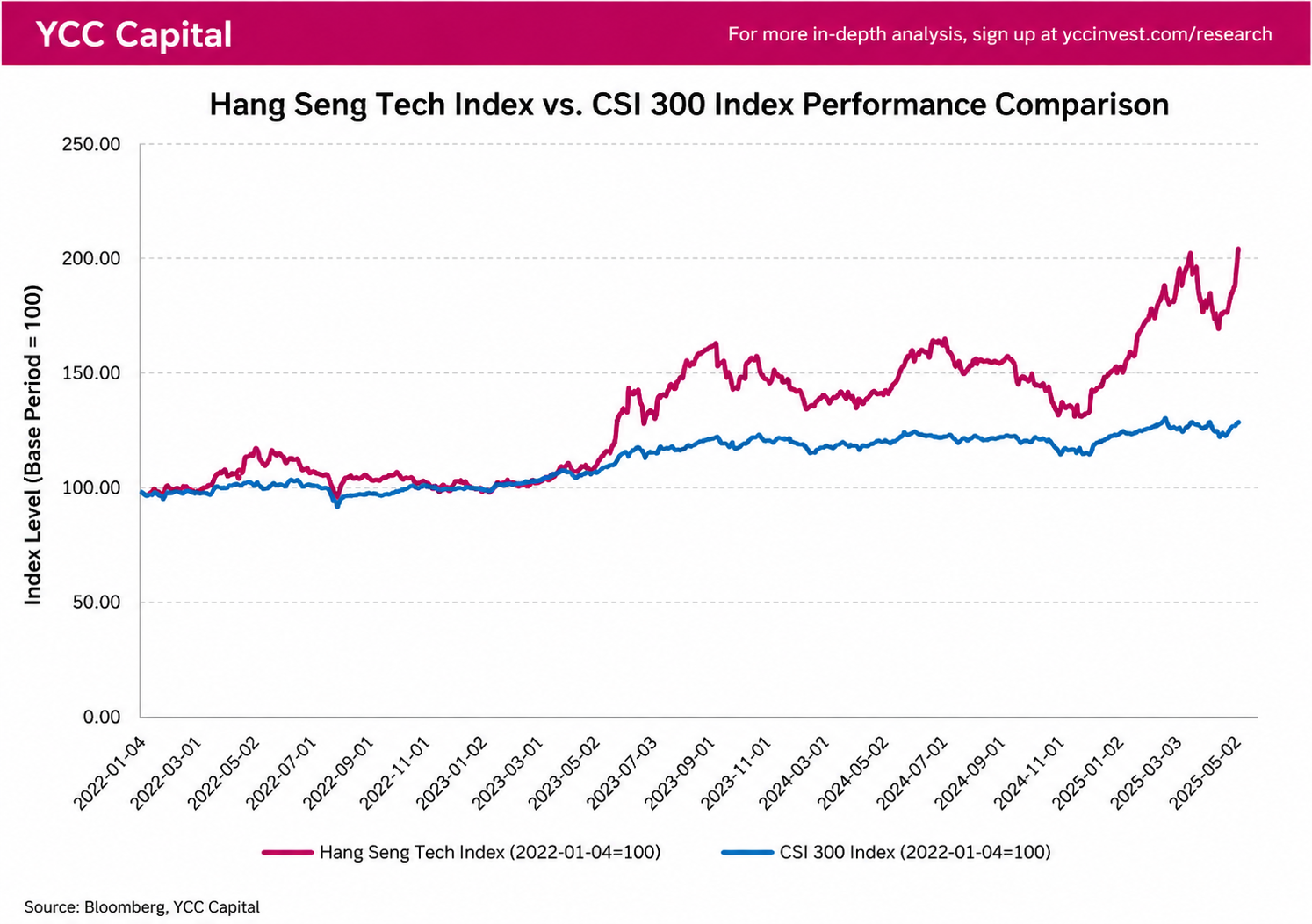
YCC CAPITAL Innovation Themes & Strategy A Strategic Framework for Investing Along the AI Theme in the Second Half of 2026 Date: June 26, 2026 Executive Summary YCC Perspective Every transformative technology creates two parallel stories. One is the story of genuine innovation that reshapes productivity and society. The other is the story of capital markets racing ahead of reality, pricing in tomorrow’s possibilities long before they fully materialize. Artificial intelligence has now become both stories simultaneously. The first half of 2026 demonstrated that AI is no longer merely another fast-growing technology sector—it has become the dominant force driving global capital allocation. Investors are increasingly rewarding companies with meaningful exposure to AI infrastructure, semiconductor manufacturing, advanced packaging, cloud computing, and large language models, while sectors lacking direct AI participation have largely been left behind. History reminds us that every technological revolution—from railroads to electricity to the Internet—experienced periods of excessive optimism. Yet history also teaches that bubbles often finance the infrastructure necessary for decades of subsequent economic expansion. The central question facing investors today is therefore not simply whether AI valuations appear expensive, but whether the industry’s underlying earnings power, technological progress, and strategic importance remain sufficient to justify those valuations. Our assessment is that while AI-related assets have undoubtedly become expensive, the current cycle continues to enjoy multiple layers of structural support. Rapid advances in model capabilities, falling inference costs, accelerating enterprise adoption, robust earnings growth, and an unprecedented global AI infrastructure investment cycle all provide meaningful fundamental backing. At the same time, valuation risks are accumulating, demanding greater discipline in portfolio construction. For investors, this is increasingly becoming a market where careful positioning matters more than indiscriminate optimism. Key Investment Conclusions During the first half of 2026, global equity markets increasingly concentrated around companies with significant exposure to artificial intelligence. U.S. mega-cap technology firms, semiconductor supply chains across Japan, Korea and Taiwan, together with China’s domestic AI hardware ecosystem, substantially outperformed broader equity markets. Although valuation multiples across AI-related industries have expanded significantly, they continue to be supported by several fundamental drivers, including continuous improvements in large language model capabilities, declining inference costs, expanding commercial applications, and sustained earnings growth. Beyond traditional Scaling Law assumptions, current AI valuations also reflect strategic competition among major powers and a pronounced fear of missing out (FOMO). The global AI capital expenditure arms race remains the single most important industrial driver entering the second half of the year. Within China’s A-share market, AI-related sectors continue to benefit from three major valuation pillars: Integration into the global AI supply chain Domestic technology substitution driven by export restrictions Rapid technological upgrading across semiconductor and computing ecosystems Taken together, these forces continue to justify elevated valuations, although downside risks are becoming increasingly difficult to ignore. YCC Capital therefore recommends maintaining a barbell investment strategy. Conservative allocations should emphasize short-duration government bonds and money market instruments to preserve liquidity, while growth allocations should remain concentrated in AI infrastructure and strategically important technologies. Preferred areas include semiconductor equipment, domestic chip manufacturers, memory, printed circuit boards (PCB), optical communication modules, liquid cooling systems, advanced packaging technologies, and leading large language model developers. Principal Risks Key downside risks include: AI capital expenditure generating lower-than-expected returns Slower-than-expected improvement in frontier model capabilities Weaker monetization of AI applications Delays in the development of China’s domestic computing ecosystem Rising U.S. real interest rates or tighter monetary policy compressing valuation multiples Excessively crowded market positioning increasing volatility Expanded government restrictions on the development or deployment of advanced AI models Table of Contents I. AI Dominated Global Equity Markets During the First Half of 2026 II. Are Current AI Valuations Excessive? III. Why Elevated AI Valuations May Still Be Fundamentally Justified IV. Every Bubble Eventually Faces Its Reckoning V. Investment Strategy for China’s AI Sector VI. Risk Factors I. AI Dominated Global Equity Markets During the First Half of 2026 Global Capital Is Increasingly Pricing AI Exposure Rather Than Geography The defining investment theme of the first half of 2026 was neither regional growth nor macroeconomic divergence. Instead, global capital increasingly differentiated companies according to one metric above all others: their degree of exposure to artificial intelligence. As of June 18, Korea’s KOSPI Index had surged 115.1% year-to-date, making it one of the world’s strongest-performing equity markets. The Philadelphia Semiconductor Index gained 102.5%, while Taiwan’s Weighted Index advanced 60.4%. Japan’s Nikkei 225, China’s STAR 50 Index, and ChiNext Index all substantially outperformed traditional broad-market benchmarks, with gains of 41.1%, 42.2%, and 32.8%, respectively. By comparison, the Nasdaq 100 rose 20.4%, the S&P 500 gained 9.6%, and China’s CSI 300 increased only 6.7%. The pattern is remarkably consistent across global markets. Investors have overwhelmingly favored sectors positioned closest to AI infrastructure, including semiconductor fabrication, advanced packaging, AI accelerators, high-performance networking, optical communications, and computing hardware. Rather than rewarding economic recovery alone, markets have increasingly rewarded participation in what has become the largest technological investment cycle since the commercialization of the Internet. One useful analogy is the California Gold Rush of the nineteenth century. While countless miners sought fortunes digging for gold, the most durable wealth was often created by businesses selling picks, shovels, railroads, and logistics. Today’s AI economy follows a similar logic. Instead of attempting to identify the ultimate winners among future AI applications, investors have increasingly concentrated capital into the indispensable infrastructure supporting the entire ecosystem. The result has been an extraordinary global repricing of AI-related assets. America’s Largest Companies Are Becoming AI Infrastructure Companies The composition of America’s largest publicly traded companies illustrates this transformation with unusual clarity. As of June 18, 2026, NVIDIA had become the world’s most valuable listed company, with a market capitalization exceeding US$5 trillion, reflecting its central position in AI accelerated computing and hyperscale data centers. Alphabet, Microsoft, Amazon, and Meta have each evolved beyond traditional software companies into comprehensive AI infrastructure providers. Their competitive advantages increasingly rest upon cloud computing capacity, enterprise AI integration, proprietary large language models, and developer ecosystems capable of commercializing AI