YCC CAPITAL
Commodity & Energy Strategy
June 29, 2026
Executive Summary
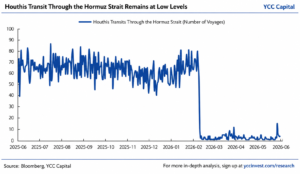
Financial markets often celebrate the reopening of a strategic chokepoint as though the crisis itself has disappeared. Yet history rarely works that way. A highway may reopen after an earthquake, but logistics companies, insurers, manufacturers and consumers do not instantly resume normal behavior. Trust rebuilds much more slowly than physical infrastructure.
The reopening of the Strait of Hormuz represents precisely this type of moment. The most severe phase of the Middle East energy shock has likely passed, and markets are appropriately removing the extreme tail-risk premium associated with a complete disruption of Gulf oil exports. However, investors should resist equating reopening with normalization. Physical supply chains, shipping confidence, insurance pricing and production capacity all recover on different timelines.
From YCC Capital’s perspective, this episode offers three structural lessons that extend well beyond crude oil itself.
First, the global energy system proved considerably more resilient than consensus expected. Strategic petroleum reserves, alternative pipeline networks, spare production capacity, expanding U.S. exports and adaptive trade flows prevented an outright breakdown of global oil markets despite one of the world’s most strategically important shipping lanes becoming impaired.
Second, geopolitical risk leaves lasting scars. Shipping lanes can reopen overnight on paper, but restoring confidence among insurers, tanker operators and multinational commodity traders is a much slower process. The market is transitioning from pricing catastrophic disruption toward pricing persistent friction.
Third, investors should increasingly shift attention away from energy beta toward structural AI alpha. The first phase of the crisis rewarded broad energy exposure. The next phase increasingly favors commodities and economies that benefit from the global AI investment cycle rather than simply higher oil prices.
These lessons will likely define asset allocation long after headlines surrounding the Strait of Hormuz fade.
The Global Energy System Passed an Unexpected Stress Test
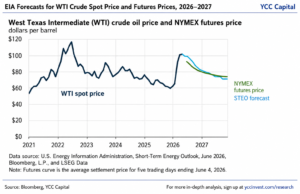
Few expected global oil markets to remain as orderly as they ultimately did.
Given that nearly one-fifth of internationally traded crude typically passes through the Strait of Hormuz, many forecasts anticipated sustained triple-digit oil prices and severe supply shortages. Neither materialized.
The explanation lies in the remarkable flexibility embedded within today’s global energy system.
Several supply-side adjustment mechanisms activated simultaneously.
Strategic petroleum reserves across major consuming nations were partially released to cushion near-term shortages. Alternative export pipelines bypassing Hormuz absorbed part of the disruption. OPEC producers with available spare capacity modestly increased production. Meanwhile, U.S. crude exports expanded further, reinforcing America’s increasingly important role as the world’s marginal supplier of energy security.
Trade routes also adapted more quickly than expected. Importers diversified purchasing toward non-Hormuz sources wherever possible, while refiners adjusted feedstock mixes to maximize operational flexibility.
Collectively, these adjustments significantly reduced the effective global supply loss relative to the headline disruption.
Importantly, resilience did not originate solely from producers.
Consumers also adjusted.
High energy prices function much like higher interest rates—they gradually suppress demand.
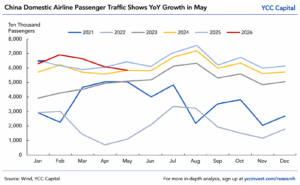
Throughout Asia, petrochemical manufacturers delayed production schedules as feedstock costs climbed. Textile producers reduced operating rates as polyester input prices increased. Airlines faced rising jet fuel expenses that translated into higher ticket prices and softer discretionary travel demand. Even seemingly unrelated industries found creative ways to conserve scarce inputs, illustrating how energy inflation eventually permeates every corner of the real economy.
Anyone who has watched a household budget adjust after gasoline prices suddenly jump understands this dynamic intuitively. Families postpone vacations, drive less frequently and delay discretionary purchases. Entire economies behave similarly—only at much larger scale.
The simultaneous adjustment of supply and demand explains why the energy shock never evolved into a systemic collapse.
Looking ahead, international energy balances could gradually return toward structural surplus conditions if production normalizes as projected. Current industry estimates continue to suggest global supply growth may outpace demand through 2027, limiting the probability of a sustained supercycle in crude prices despite elevated geopolitical uncertainty.
Reopening Does Not Mean Recovery
Markets naturally respond to headlines.
Supply chains respond to incentives.
The distinction matters.
The recent U.S.-Iran understanding that facilitated the reopening of the Strait substantially reduced the probability of an outright energy catastrophe. Brent crude rapidly surrendered much of its geopolitical premium following the announcement.
However, reducing tail risk should not be confused with restoring normal market functioning.
Several obstacles remain.
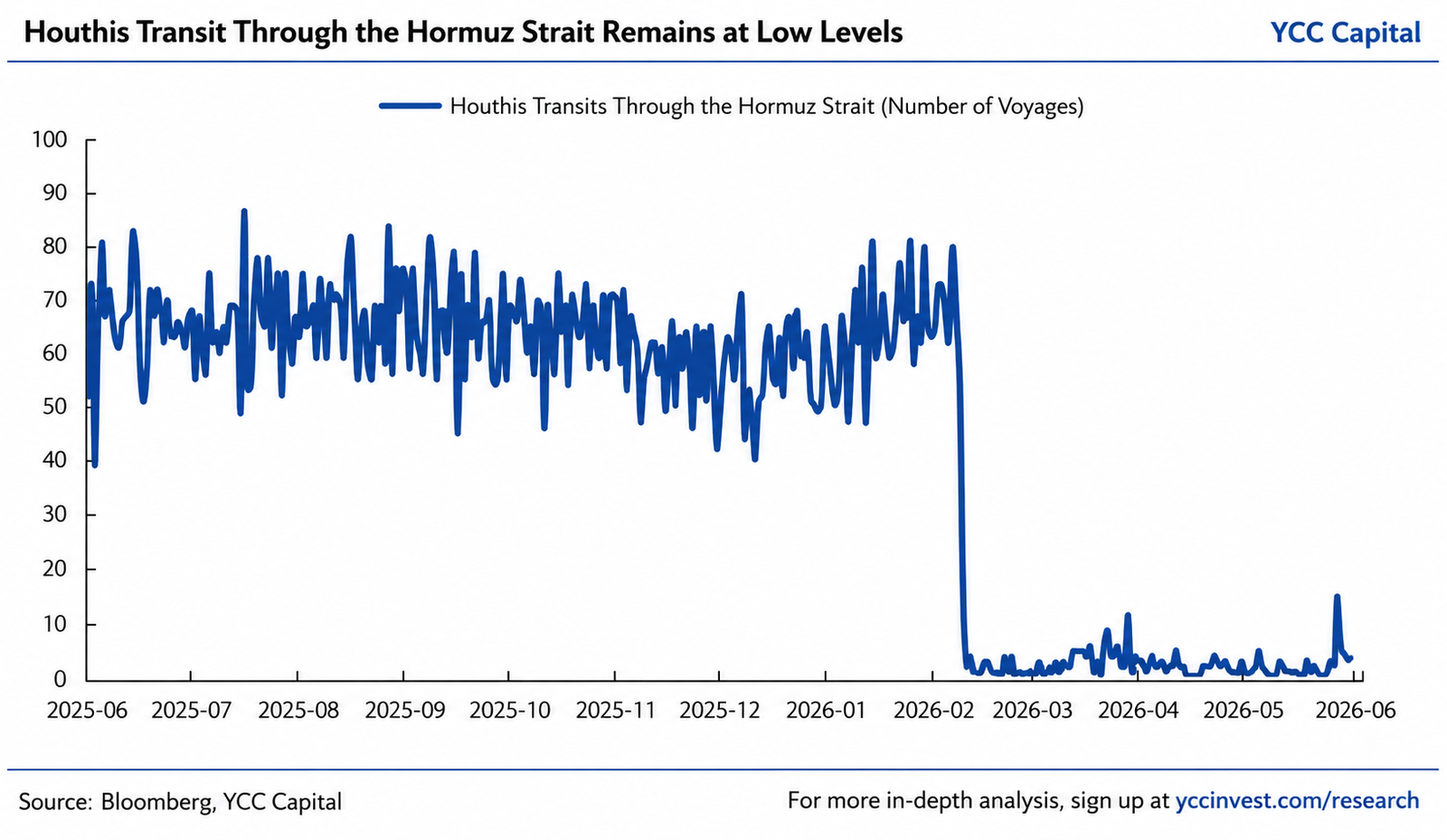
Maritime mines must still be cleared. Navigation systems require continuous security verification. Shipping operators need confidence that vessels will not become targets once again. Insurance companies remain cautious, and war-risk premiums rarely disappear immediately after ceasefires.
Moreover, temporary political agreements remain exactly that—temporary.
The current framework postpones rather than resolves more fundamental disputes surrounding sanctions, nuclear negotiations, maritime security and regional military competition.
Consequently, shipping companies are unlikely to immediately return to pre-crisis operating patterns.
The experience of the Red Sea offers an instructive comparison. Despite improvements in security conditions, commercial shipping volumes remained well below historical averages for an extended period because confidence recovered much more slowly than physical accessibility.
Hormuz is unlikely to prove different.
The market must also recognize another overlooked reality.
Reopening shipping lanes does not automatically restore production.
During the disruption, inventories accumulated rapidly across several exporting regions, forcing temporary production shut-ins. Restarting oil fields is rarely as simple as turning a switch.
Older reservoirs requiring water or gas injection may take months to stabilize. Supporting infrastructure—including pipelines, storage facilities, ports, engineering services and specialized labor—must all synchronize before production fully normalizes.
Accordingly, we expect oil price volatility to moderate while average price levels remain above pre-conflict norms for an extended period.
The era of crisis pricing may be ending.
The era of friction pricing is only beginning.
Energy Security Is Becoming a Structural Investment Theme
One of the most important consequences of the crisis may not be oil prices themselves but rather the strategic decisions governments make afterward.
Countries increasingly recognize that dependence upon a single maritime chokepoint represents an unacceptable national vulnerability.
The United Arab Emirates has already accelerated efforts to reduce reliance on Hormuz through expanded pipeline capacity and major investments along its eastern coastline.
Other regional producers are likely to pursue similar diversification strategies.
This mirrors broader trends unfolding across global manufacturing.
Following the pandemic, corporations diversified supply chains away from excessive geographic concentration.
Following the Hormuz disruption, energy infrastructure is entering a similar diversification cycle.
This implies increased investment across ports, pipelines, LNG infrastructure, storage capacity and strategic petroleum reserves for years rather than months.
For long-term investors, these secondary infrastructure investments may ultimately prove more durable than short-term movements in crude oil prices themselves.
Commodities Are Transitioning from Energy Beta to AI Alpha
Perhaps the most underappreciated investment lesson emerging from the Hormuz episode concerns commodity differentiation.
During the initial stages of the conflict, virtually every energy-sensitive commodity appreciated together.
Petrochemicals, polymers, fertilizers, industrial chemicals and transportation-related inputs all reflected rising hydrocarbon costs.
Yet as geopolitical fears gradually subsided, performance dispersion widened dramatically.
Markets began distinguishing between temporary energy exposure and structural AI demand.
Commodities directly connected to next-generation computing infrastructure retained considerable strength.
High-purity helium remained supported by semiconductor manufacturing.
Specialty industrial gases continued benefiting from advanced chip fabrication.
Copper, silver and tin reflected accelerating investment in electrification and high-performance computing.
Lithium, advanced battery materials, PCB substrates, cooling technologies and specialized electronic materials likewise maintained stronger pricing than traditional petrochemical products.
This transition represents a broader shift in market leadership.
The first phase priced energy scarcity.
The second phase increasingly prices technological scarcity.
At YCC Capital, we believe investors should avoid viewing commodities as a homogeneous asset class.
The next commodity cycle will likely reward exposure to structural AI investment far more consistently than generalized energy inflation.
Currency Markets Reveal a New Hierarchy of Resilience
Foreign exchange markets offered another valuable lesson.
Countries experiencing similar oil price shocks produced remarkably different currency outcomes.
The explanation lies not merely in energy dependence but in overall economic adaptability.
China demonstrated relative resilience during the immediate disruption because of its extensive manufacturing ecosystem, growing renewable energy deployment and relatively diversified industrial base. These factors temporarily insulated the economy from some of the direct consequences of higher imported energy costs.
Nevertheless, YCC Capital remains cautious regarding China’s longer-term outlook. Structural headwinds—including persistent weakness in the property sector, deteriorating demographics, slowing productivity growth, elevated local government debt and escalating geopolitical trade tensions—continue to constrain sustainable economic expansion. Short-term manufacturing advantages should not be mistaken for durable structural strength.
India and several Southeast Asian economies faced a considerably more difficult environment.
Heavy dependence on imported crude widened external imbalances while higher input costs squeezed low-value manufacturing sectors. At the same time, AI increasingly challenges India’s traditional outsourcing model, particularly in standardized software development, customer service and routine business process operations.
The combination of rising energy costs and accelerating technological disruption represents a particularly challenging mix for economies concentrated in lower value-added services.
Japan and South Korea occupy a more balanced position.
Both remain significant beneficiaries of semiconductor investment and the global AI hardware cycle. Japanese industrial automation, advanced materials and semiconductor equipment producers continue to enjoy favorable long-term demand. South Korea similarly benefits from memory chip leadership.
However, both economies remain substantial net energy importers, limiting the extent to which AI-related export strength fully translates into currency appreciation during periods of elevated oil prices.
We remain constructive on Japan’s long-term investment outlook despite these cyclical challenges. Corporate governance reforms, continued automation, reshoring initiatives and increasing shareholder returns provide structural support extending well beyond the current energy cycle.
The United States occupies perhaps the strongest structural position.
Its emergence as both an energy superpower and the global center of AI innovation creates a uniquely favorable combination. Expanding hydrocarbon exports reduce vulnerability to external supply disruptions while deep capital markets continue attracting global investment into next-generation technologies.
Although fiscal challenges remain significant, America’s energy independence and innovation ecosystem provide enduring competitive advantages.
Investment Implications
For investors, the reopening of Hormuz should not signal the end of geopolitical positioning but rather a transition toward more selective opportunities.
Broad energy exposure is likely to generate diminishing excess returns as immediate supply fears ease.
Instead, greater emphasis should be placed upon infrastructure supporting energy diversification, AI-related industrial commodities and economies capable of adapting to both technological transformation and geopolitical fragmentation.
Portfolio construction increasingly requires evaluating resilience rather than simply growth.
The strongest economies will not necessarily be those growing fastest today.
They will be those capable of absorbing future shocks with the least disruption.
That distinction is becoming increasingly valuable in a world defined by geopolitical uncertainty, fragmented globalization and accelerating technological change.
YCC Capital Strategic View
The reopening of the Strait of Hormuz marks the conclusion of one chapter rather than the conclusion of the story.
Financial markets have already begun repricing away catastrophic supply disruption.
The next investment cycle will instead revolve around structural competitiveness.
Countries with diversified energy systems, technological leadership, institutional credibility and adaptive supply chains are likely to command persistent valuation premiums.
Similarly, commodity markets will increasingly reward scarcity linked to AI infrastructure instead of broad exposure to fossil fuels alone.
The defining investment question is no longer whether oil can flow freely through Hormuz.
It is which economies and industries are best positioned to prosper when the next disruption inevitably arrives.
At YCC Capital, we believe that distinction will shape global asset allocation for years to come.
Portfolio Positioning
Every geopolitical shock eventually evolves into an investment framework. The initial phase is dominated by fear, where investors focus on immediate supply disruptions and headline risks. The second phase becomes more nuanced, rewarding those able to distinguish between temporary dislocations and lasting structural change. We believe the reopening of the Strait of Hormuz marks the beginning of this second phase.
For commodities, investors should gradually shift attention from broad-based energy exposure toward materials linked to electrification, data infrastructure, and artificial intelligence. Copper remains one of our highest-conviction strategic commodities, reflecting its indispensable role in power grids, electric vehicles, hyperscale data centers, and industrial automation. Silver continues to benefit from both precious-metal characteristics and expanding industrial demand from solar and advanced electronics. High-purity helium and specialty industrial gases are increasingly becoming strategic inputs rather than niche industrial products, while advanced PCB materials, semiconductor chemicals, and thermal management technologies should continue enjoying structural demand growth.
Traditional petrochemical products, by contrast, may struggle to sustain their earlier gains once energy costs stabilize. Their pricing remains closely tied to hydrocarbon feedstocks rather than long-term technological investment.
Within equities, the distinction between energy producers and energy beneficiaries becomes increasingly important. Integrated oil majors continue generating attractive cash flows under elevated crude prices, yet much of the easy valuation expansion has likely occurred during the initial geopolitical shock. Looking forward, companies enabling energy resilience—including pipeline operators, LNG infrastructure developers, grid equipment manufacturers, industrial automation firms, and semiconductor supply chains—appear better positioned to generate sustained earnings growth.
The United States remains our preferred equity market over the medium term. America’s combination of energy independence, deep capital markets, technological leadership, and institutional resilience provides multiple layers of protection against external shocks. AI investment remains in its early stages, and capital expenditure by hyperscale cloud providers, semiconductor manufacturers, and industrial automation companies should continue supporting earnings growth across a wide ecosystem.
Japan also remains constructive from a strategic perspective. Although higher energy prices temporarily pressure corporate margins, ongoing improvements in corporate governance, shareholder returns, automation, and semiconductor investment continue to strengthen the country’s long-term investment appeal. Rather than representing structural decline, Japan’s current challenges should be viewed as cyclical adjustments within an economy that continues to improve its capital efficiency and global competitiveness.
Emerging Asia presents a more differentiated picture. Countries with heavy dependence on imported hydrocarbons, limited fiscal flexibility, and exposure to low-value-added manufacturing face increasing pressure from both higher energy costs and accelerating technological disruption. AI is not only reshaping manufacturing but also redefining global service industries, reducing the comparative advantage of labor-intensive outsourcing models.
China deserves particular attention. While the country’s manufacturing ecosystem and renewable energy deployment temporarily cushion external energy shocks, we remain cautious regarding its structural outlook. The property sector remains deeply impaired, demographic trends continue to deteriorate, private-sector confidence has yet to fully recover, and external trade tensions are likely to remain a persistent drag on long-term growth. Although China will continue to play an important role in global manufacturing, we believe investors should increasingly distinguish between cyclical resilience and structural attractiveness.
Currency markets reinforce these conclusions. Economies combining energy security, credible policy frameworks, technological leadership, and strong external balances are likely to outperform over the medium term. Conversely, countries simultaneously confronting imported inflation, fiscal constraints, and technological displacement may experience persistent currency headwinds.
Conclusion
The reopening of the Strait of Hormuz should not be interpreted as a simple return to the pre-crisis world. Rather, it marks the transition from pricing catastrophic disruption toward evaluating structural resilience.
The past several months have demonstrated that the global energy system possesses greater flexibility than many anticipated. Inventories, spare production capacity, alternative transportation routes, and adaptive demand all contributed to preventing an outright collapse in global oil markets. Yet resilience should not be confused with invulnerability. Shipping confidence, insurance markets, production recovery, and geopolitical trust require considerably longer to rebuild than physical infrastructure.
Just as importantly, this episode highlights a broader transformation taking place across global markets. Energy security is becoming inseparable from technological leadership. The winners of the next investment cycle will not simply be those producing hydrocarbons, but those capable of integrating secure energy systems with advanced manufacturing, AI infrastructure, and resilient supply chains.
For investors, the most valuable lesson extends well beyond oil.
Every major geopolitical disruption forces markets to reconsider which economies possess genuine flexibility under stress. The reopening of Hormuz provides another reminder that resilience is increasingly becoming one of the world’s most valuable economic assets.
As geopolitical fragmentation accelerates and AI reshapes industrial competitiveness, investment success will depend less on predicting the next crisis than on identifying those economies, industries, and companies capable of thriving despite it.
At YCC Capital, we believe the next decade will reward portfolios built around structural resilience rather than cyclical momentum. The reopening of the Strait of Hormuz is therefore not the end of an energy story—it is the beginning of a new framework for thinking about global macro investing.
Editorial Board
Ken Cao
Chief Strategist, Global Investment Strategy
Le Gao
Managing Analyst
Yui Nabeshima
Strategist
Mai Ikeda
Research Analyst
IMPORTANT DISCLAIMER
This research report is provided for informational and educational purposes only and does not constitute an offer to sell or a solicitation of an offer to buy any securities, financial instruments, or investment products. It is not intended as investment, legal, accounting, or tax advice and should not be relied upon as such. The views, opinions, and projections expressed herein are those of YCC Capital Management and its research personnel as of the date of publication and are subject to change without notice. Past performance is not indicative of future results.
YCC Capital Management, its affiliates, principals, and employees may hold long or short positions in securities or instruments discussed in this report and may trade for their own accounts or for client accounts in a manner inconsistent with the recommendations herein. This report is based on publicly available information and data believed to be reliable, but YCC Capital makes no representation or warranty, express or implied, as to the accuracy, completeness, or timeliness of such information. Forward-looking statements involve risks and uncertainties that could cause actual results to differ materially from those projected.
Recipients of this report should conduct their own independent due diligence and consult with their own financial, legal, and tax advisors before making any investment decisions. YCC Capital accepts no liability for any loss or damage arising from the use of or reliance on this report or its contents.
This report is intended solely for the use of the intended recipient(s) and may not be reproduced or redistributed for commercial purposes without the prior written consent of YCC Capital. © 2026 YCC Capital. All rights reserved. YCC Capital’s flagship vehicle, the YCC International Value Fund, LP, maintains a concentrated global macro value strategy with a focus on capital-flow-driven mispricings and asymmetric hedging opportunities. The Fund is registered in the State of Delaware, U.S. and structured as a Rule 506(c) private fund. Performance data, where referenced, has been verified by independent third parties including NAV Consulting; however, individual investor results may vary.
Contact Us
YCC Capital Research
Email: ir@yccinvest.com
For complimentary daily macro research, investment insights, and market strategy updates, subscribe to our free newsletter at:
YCC Capital Research | Sign up for free daily market insight at www.yccinvest.com
For more related research:
Oil After the Shock: Why Tight Supply Is Likely to Keep Inflation Elevated Through Year-End
Peace Priced In, Pain Still Ahead: Why the U.S.–Iran Accord Does Not End the Economic Aftershocks
The Energy Shock Is Fading—Now Markets Must Price the Next Liquidity Cycle