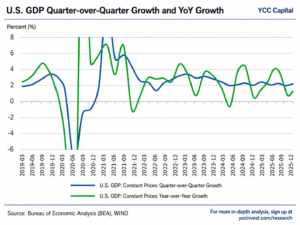
 As the 2026 U.S. midterm elections draw closer, the Trump administration’s policy priorities are increasingly being shaped by electoral arithmetic rather than legislative ambition. The political landscape suggests Republicans face a meaningful risk of losing control of the House of Representatives, while retaining the Senate—particularly by defending key swing states—has become the administration’s overriding objective.
From YCC Capital’s perspective, this political reality will define Washington’s macro policy agenda over the coming quarters. Measures capable of producing visible domestic economic benefits before November remain limited. Inflation remains above target, fiscal legislation faces procedural hurdles, and structural reforms require more time than the electoral calendar allows. Consequently, the administration is likely to emphasize policies that can be implemented rapidly through executive authority, while shifting public attention toward international issues where political victories are easier to communicate.
In practice, this implies a governing philosophy best summarized as “address domestic challenges through external action.” Rather than allowing voters to focus on persistent inflation or legislative gridlock, the administration is expected to place greater emphasis on trade disputes, national security, immigration enforcement, and geopolitical competition—issues that resonate strongly with its political base.
History offers many examples of governments seeking external achievements during periods of domestic constraint. When household budgets remain under pressure, political narratives often become just as important as economic statistics. For many voters, perceptions of national strength can temporarily outweigh frustration over grocery bills or mortgage costs.
The administration therefore appears likely to revive a more assertive version of the “America First” agenda, coupling economic nationalism with an increasingly selective approach to international engagement.
Tariffs Likely to Return to the Center of Economic Policy
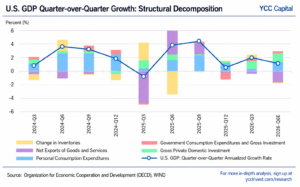
Trade policy is expected to become one of the administration’s primary policy tools.
YCC Capital expects renewed Section 301 tariffs to be introduced relatively quickly, both as a negotiating instrument and as a visible demonstration of support for domestic manufacturing. Although tariffs carry inflationary risks over the medium term, their political appeal remains considerable. They provide a tangible policy action that can be implemented without requiring congressional approval while reinforcing the administration’s narrative of protecting American workers.
For financial markets, however, tariffs represent a double-edged sword. While selected domestic industries may benefit from increased protection, higher import costs would place additional upward pressure on producer prices and potentially complicate the Federal Reserve’s inflation battle. Supply chains have become more diversified than during the first Trump administration, but they remain globally interconnected, meaning renewed trade barriers would still ripple across manufacturing, logistics, and corporate earnings.
Geopolitics: Selective Confrontation Rather Than Global Intervention
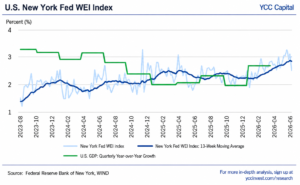
The administration is also expected to adopt a more selective geopolitical strategy.
Rather than pursuing broad international commitments, Washington is likely to prioritize situations where political victories can be demonstrated clearly while avoiding prolonged military entanglements. This approach resembles an updated version of the Monroe Doctrine—placing greater emphasis on America’s immediate strategic interests while limiting commitments elsewhere unless direct national interests are involved.
Such an approach seeks highly visible diplomatic successes without assuming open-ended geopolitical liabilities.
Markets generally favor predictability over activism. A foreign policy centered on measurable objectives rather than expansive nation-building could reduce certain geopolitical risk premiums, although trade frictions and strategic competition are likely to remain persistent features of the global investment landscape.
Federal Reserve: A More Hawkish Institutional Direction
Another important theme emerging from the report is the anticipated shift in Federal Reserve leadership.
Under the baseline scenario presented, Kevin Warsh would steer the Federal Reserve toward a more explicitly hawkish policy framework while simultaneously initiating institutional reforms aimed at increasing accountability and modernizing the central bank’s decision-making process.
Warsh’s initial public messaging has emphasized one overriding objective: restoring price stability before pursuing easier monetary policy.
According to the report, reform efforts would include establishing multiple expert working groups and drawing upon outside academic expertise to reassess the Federal Reserve’s operating framework. Such reforms would represent one of the most significant institutional overhauls in decades.
For markets, the symbolism may matter almost as much as the policy itself. Central-bank credibility is built not merely through interest-rate decisions but through confidence that policymakers remain committed to their inflation mandate.
Interest Rates: Higher for Longer
Despite signs that inflation could gradually moderate later in the year, the report argues that the United States is unlikely to re-enter an easing cycle anytime soon.
The baseline expectation remains that one additional rate increase could occur during the second half of the year if inflation proves more persistent than anticipated. Even if further tightening ultimately proves unnecessary, policymakers are expected to maintain a restrictive stance until inflation moves convincingly back toward target.
From YCC Capital’s perspective, the underlying logic remains straightforward.
The U.S. economy has demonstrated remarkable resilience despite elevated borrowing costs. Consumer spending has stabilized, business investment—particularly in artificial intelligence infrastructure—remains exceptionally strong, and labor-market conditions continue to support income growth. Under such circumstances, prematurely easing policy would risk reigniting inflation before it has been fully contained.
Only under a scenario in which inflation declines materially faster than expected would policymakers likely abandon additional tightening.
Looking further ahead, the report suggests that any meaningful return to rate cuts is more likely to emerge during 2027 rather than in the immediate future.
Strategic Investment View
The interaction between politics, monetary policy, and structural investment continues to define the investment landscape.
Political headlines will undoubtedly generate short-term volatility. Tariff announcements, election polling, and geopolitical developments are all capable of producing sharp market reactions over days or weeks. Yet beneath that noise, the more durable investment story remains centered on productivity growth driven by technological investment.
America’s AI capital expenditure boom continues to represent one of the strongest structural growth engines globally. While concerns surrounding commercialization and return on investment deserve close monitoring, current spending commitments remain largely locked in through multi-year infrastructure programs.
Meanwhile, inflation appears likely to moderate gradually rather than collapse, implying that interest rates should remain structurally higher than investors became accustomed to during the previous decade.
For long-term investors, the environment increasingly resembles a marathon rather than a sprint. Political cycles may dominate daily headlines, but sustained corporate investment, technological innovation, and productivity improvements ultimately determine economic performance over time.
At YCC Capital, we continue to believe that disciplined allocation toward high-quality U.S. assets, supported by structural innovation and resilient private-sector investment, offers a stronger long-term foundation than attempting to trade every political headline. While policy uncertainty will remain elevated heading into the midterm elections, America’s underlying capacity for innovation continues to distinguish it from most developed economies, even as investors should remain selective, valuation-conscious, and attentive to inflation risks.
Portfolio Implications: Navigating a Higher-for-Longer America
One of the defining features of the coming investment cycle is that political developments and macro fundamentals are no longer moving independently. Fiscal policy, monetary policy, trade policy, and geopolitics are increasingly reinforcing one another. Investors should therefore avoid viewing each headline in isolation. Instead, the broader framework is one of a structurally stronger U.S. economy operating alongside structurally higher inflation than markets became accustomed to during the decade following the Global Financial Crisis.
This combination creates both opportunities and risks.
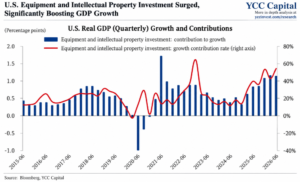
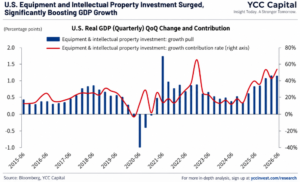
For equity investors, the continued surge in AI-related capital expenditure remains the dominant structural theme. The report’s analysis shows that a relatively small group of technology companies now accounts for an increasingly large share of total U.S. equipment investment, transforming corporate spending into one of the country’s principal growth engines. Such concentration naturally raises questions about valuation and execution risk, yet it also reflects where productivity gains are being generated.
Just as railroads reshaped industrial America during the nineteenth century and the internet transformed commerce in the late twentieth century, artificial intelligence infrastructure appears positioned to become the defining investment cycle of the current decade. Markets will undoubtedly experience periods of excessive optimism and inevitable corrections, but the underlying investment trend remains intact.
This does not imply that every AI-related company will emerge as a winner. Capital-intensive investment cycles often produce clear leaders alongside numerous disappointments. Investors should therefore emphasize firms possessing durable competitive advantages, pricing power, strong balance sheets, and proven execution rather than simply chasing headline growth.
Fixed Income: Attractive Income Returns Re-emerge
For bond investors, the environment differs markedly from that of the previous decade.
With inflation remaining above the Federal Reserve’s target and monetary policy expected to stay restrictive, government bond yields are likely to remain elevated for an extended period. While higher yields increase borrowing costs across the economy, they also restore an investment characteristic largely absent during the era of near-zero interest rates: meaningful income generation.
At YCC Capital, we believe investors should increasingly view fixed income not merely as a defensive allocation but as a genuine source of long-term total return. High-quality investment-grade bonds, selectively managed duration exposure, and cash instruments once again deserve meaningful roles within diversified portfolios.
Nevertheless, duration risk should be managed carefully. If inflation proves stickier than anticipated or tariff-driven price pressures intensify, long-term Treasury yields could remain volatile before ultimately stabilizing.
Consumer Trends: Resilience Without Excess
The report’s analysis paints a nuanced picture of the American consumer.
Households continue to spend despite higher financing costs, supported by improving confidence, healthier labor-market conditions, and gradually easing energy prices. Yet disposable income growth remains modest after adjusting for inflation, while pandemic-era excess savings have largely been exhausted.
Consumers today resemble disciplined travelers nearing the end of a long journey. They continue moving forward, but with greater awareness of every dollar spent.
This suggests consumption should remain sufficiently resilient to prevent recession while becoming increasingly selective across sectors. Businesses offering clear value propositions, essential services, or differentiated products are likely to outperform discretionary spending categories dependent upon abundant consumer liquidity.
Housing: A Gradual Rather Than Dramatic Recovery
Residential real estate remains one of the weaker components of the U.S. economy.
Elevated mortgage rates continue suppressing affordability, discouraging both first-time buyers and existing homeowners from entering the market. Many households remain locked into mortgages originated during the ultra-low-rate period, reducing housing turnover and limiting transaction volumes.
While declining inflation could eventually lower long-term interest rates and modestly improve affordability, YCC Capital does not anticipate a rapid rebound in residential investment under the current policy trajectory.
Instead, housing is likely to transition gradually from being a modest drag on economic growth toward a more neutral contributor over the medium term.
Inflation Risks Remain the Principal Macro Variable
Perhaps the single most important takeaway from the report is that inflation has become considerably more complex than a simple energy-price story.
Although higher oil prices initially drove much of the recent acceleration, cost pressures have increasingly spread into services and other sticky components of inflation. Once higher transportation, logistics, insurance, labor, and operating costs become embedded throughout the economy, inflation becomes significantly more persistent.
This distinction matters greatly for investors.
Temporary commodity shocks can often be ignored. Persistent service inflation cannot.
The Federal Reserve therefore faces an environment in which patience may prove more valuable than speed. Maintaining restrictive policy somewhat longer than markets anticipate could ultimately reduce the probability of requiring even more aggressive tightening later.
YCC Capital Strategic Outlook
Looking ahead, we continue to expect the United States to outperform most developed economies on a relative basis over the medium term.
While political uncertainty surrounding the midterm elections will undoubtedly generate episodes of volatility, America’s competitive advantages remain substantial. Robust private-sector investment, technological leadership, relatively healthy household balance sheets, and continued innovation across artificial intelligence and advanced manufacturing provide meaningful structural support for long-term growth.
By contrast, investors should remain cautious toward economies facing weaker productivity growth, deteriorating demographics, or greater policy uncertainty. Structural divergence rather than synchronized global expansion is increasingly becoming the defining characteristic of the post-pandemic world.
Successful investing during this environment will depend less on predicting every policy announcement and more on identifying durable trends capable of compounding over many years.
As every experienced investor eventually learns, markets often reward patience more consistently than prediction. Daily headlines shape sentiment, but long-term wealth is ultimately built upon enduring economic fundamentals.
Conclusion: The Next Phase of the U.S. Cycle Will Be Defined by Productivity, Not Stimulus
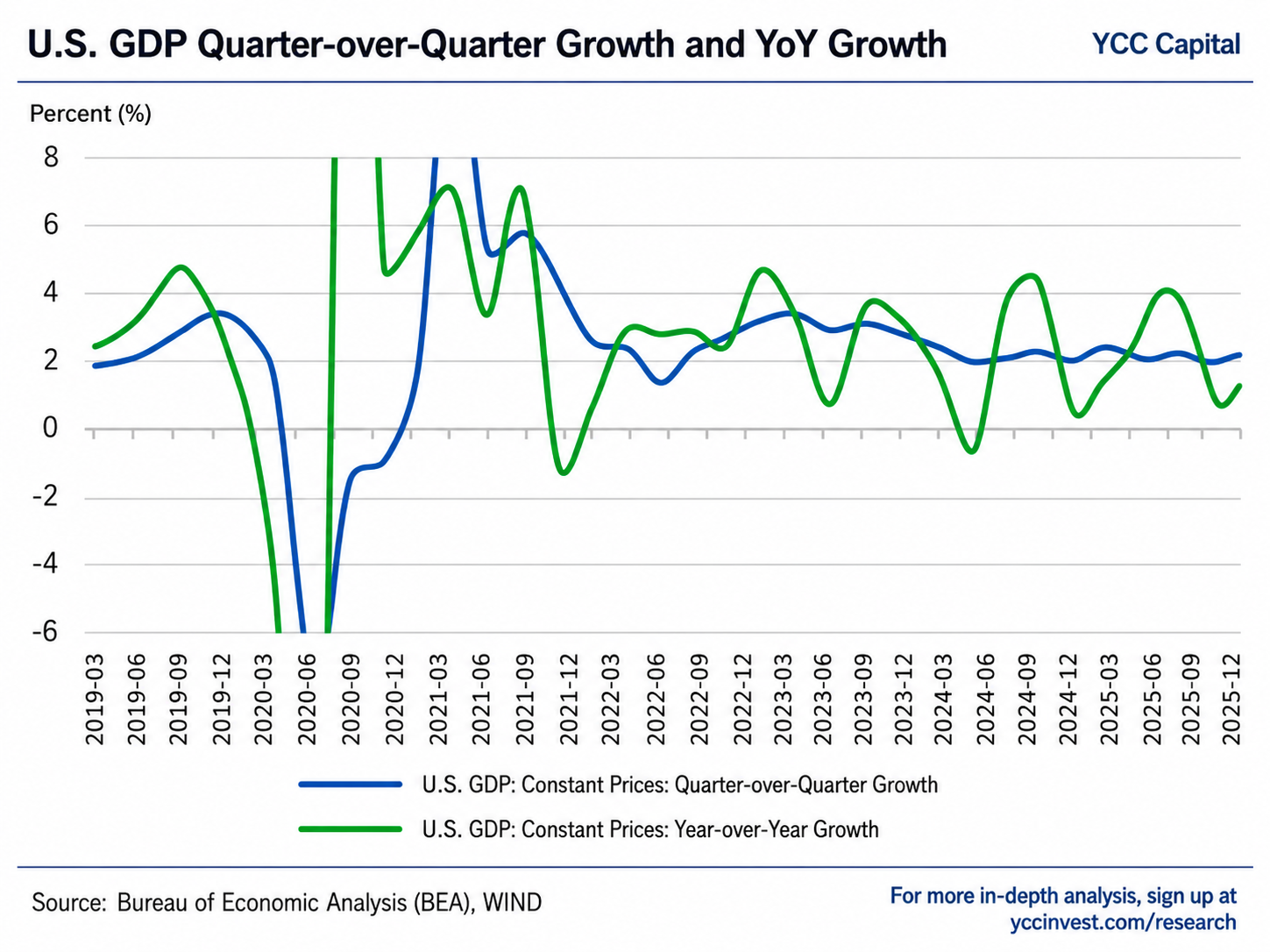
The investment environment entering the second half of 2026 differs fundamentally from the one investors faced over the previous several years. The extraordinary fiscal stimulus of the pandemic era has faded, the Federal Reserve is no longer acting as a reliable source of market liquidity, and inflation has re-emerged as the principal constraint on policymaking. Yet contrary to widespread recession fears that dominated market narratives only a year earlier, the U.S. economy continues to demonstrate considerable resilience.
This resilience is increasingly structural rather than cyclical.
Consumption remains supported by a still-healthy labor market, corporate investment is being propelled by one of the largest technology infrastructure cycles in decades, and private-sector balance sheets remain considerably stronger than in previous tightening cycles. Rather than relying on government stimulus, growth is increasingly being generated by productivity-enhancing investment—a far healthier foundation for long-term expansion.
That said, investors should resist complacency.
The concentration of capital expenditure among a relatively small number of technology companies introduces execution risk. The AI investment cycle resembles previous technological revolutions in one important respect: infrastructure spending typically arrives well before commercial returns become fully visible. During the railroad boom, the electrification era, and the early internet expansion, markets frequently oscillated between excessive optimism and excessive pessimism before sustainable business models emerged.
Artificial intelligence is unlikely to prove different.
Current investment levels imply enormous expectations regarding future productivity gains. Should commercialization disappoint or enterprise adoption proceed more slowly than markets anticipate, corporate capital expenditure could moderate materially in later years. While we do not expect such a scenario to unfold over the immediate investment horizon given existing order backlogs and multi-year infrastructure commitments, it remains one of the most significant medium-term risks investors should monitor.
Inflation likewise deserves continued attention.
Although our base case anticipates gradually moderating energy prices and easing headline inflation, the persistence of service-sector inflation suggests that the path back toward the Federal Reserve’s target will remain uneven. Markets expecting an aggressive return to near-zero interest rates are likely underestimating the structural shifts currently taking place across labor markets, supply chains, and fiscal policy.
Higher nominal interest rates may therefore become a defining characteristic of this decade rather than a temporary deviation.
For investors, this represents less a threat than an adjustment.
The post-Global Financial Crisis environment conditioned markets to expect abundant liquidity, exceptionally low discount rates, and steadily expanding valuation multiples. The emerging investment regime instead rewards businesses capable of generating genuine earnings growth, strong free cash flow, disciplined capital allocation, and sustainable competitive advantages.
In many respects, markets are returning to more traditional fundamentals.
YCC Capital Investment Perspective
At YCC Capital, we believe investors should distinguish between cyclical volatility and structural opportunity.
Election headlines, tariff announcements, geopolitical developments, and monetary policy meetings will continue to generate periods of heightened market volatility. Such episodes are inevitable in any mature economic expansion. However, they should not obscure the broader forces reshaping the global economy.
The United States continues to benefit from unmatched technological leadership, deep capital markets, entrepreneurial dynamism, and an increasingly powerful productivity cycle driven by artificial intelligence and advanced manufacturing. While policy uncertainty remains elevated, these structural advantages continue to support our constructive medium-term outlook on U.S. assets.
Conversely, investors should remain selective when allocating internationally. Slowing productivity growth, demographic headwinds, elevated debt burdens, and persistent policy uncertainty continue to weigh on several major economies. In particular, China’s structural challenges—including property-market weakness, declining private-sector confidence, demographic deterioration, and ongoing geopolitical tensions—are likely to constrain its long-term growth trajectory despite periodic policy support.
Global leadership is becoming increasingly differentiated rather than synchronized.
Portfolio construction should therefore prioritize resilience over speculation. Diversification remains essential, but diversification should not be confused with indiscriminate exposure. Capital should increasingly flow toward regions, sectors, and companies capable of generating sustainable earnings growth in a world characterized by higher capital costs and greater geopolitical fragmentation.
Ultimately, successful investing is rarely about forecasting every headline correctly. It is about identifying enduring structural trends before they become conventional wisdom and maintaining discipline as markets inevitably fluctuate around those long-term trajectories.
As we enter the next stage of the global economic cycle, patience, selectivity, and a relentless focus on quality remain, in our view, the defining characteristics of successful long-term investment strategy.
Editorial Board
Ken Cao
Chief Strategist, Global Investment Strategy
Le Gao
Managing Analyst
Yui Nabeshima
Strategist
Mai Ikeda
Research Analyst
IMPORTANT DISCLAIMER
This research report is provided for informational and educational purposes only and does not constitute an offer to sell or a solicitation of an offer to buy any securities, financial instruments, or investment products. It is not intended as investment, legal, accounting, or tax advice and should not be relied upon as such. The views, opinions, and projections expressed herein are those of YCC Capital Management and its research personnel as of the date of publication and are subject to change without notice. Past performance is not indicative of future results.
YCC Capital Management, its affiliates, principals, and employees may hold long or short positions in securities or instruments discussed in this report and may trade for their own accounts or for client accounts in a manner inconsistent with the recommendations herein. This report is based on publicly available information and data believed to be reliable, but YCC Capital makes no representation or warranty, express or implied, as to the accuracy, completeness, or timeliness of such information. Forward-looking statements involve risks and uncertainties that could cause actual results to differ materially from those projected.
Recipients of this report should conduct their own independent due diligence and consult with their own financial, legal, and tax advisors before making any investment decisions. YCC Capital accepts no liability for any loss or damage arising from the use of or reliance on this report or its contents.
This report is intended solely for the use of the intended recipient(s) and may not be reproduced or redistributed for commercial purposes without the prior written consent of YCC Capital. © 2026 YCC Capital. All rights reserved. YCC Capital’s flagship vehicle, the YCC International Value Fund, LP, maintains a concentrated global macro value strategy with a focus on capital-flow-driven mispricings and asymmetric hedging opportunities. The Fund is registered in the State of Delaware, U.S., and structured as a 506(c) fund. Performance data, where referenced, has been verified by independent third parties including NAV Consulting; however, individual investor results may vary.
Contact Us
For research inquiries, institutional partnerships, or media requests, please contact:
To receive complimentary daily macro research, market commentary, and investment insights, sign up at www.yccinvest.com.
YCC Capital Research | Sign up for free daily market insight at www.yccinvest.com
For more related research:
The Energy Shock Is Fading—Now Markets Must Price the Next Liquidity Cycle
When the Tide Recedes: Why the U.S. Dollar Is Entering a New Era of Two-Way Risk
The Warsh Doctrine: A New Federal Reserve, A New Market Playbook